
A scrollable introduction
See what is waiting inside.
Explore the library, inspect an Evidence Passport, meet the Peptarch, and glimpse Learn and the Lab in one guided welcome.
Evidence → Peptarch → Learn → Lab
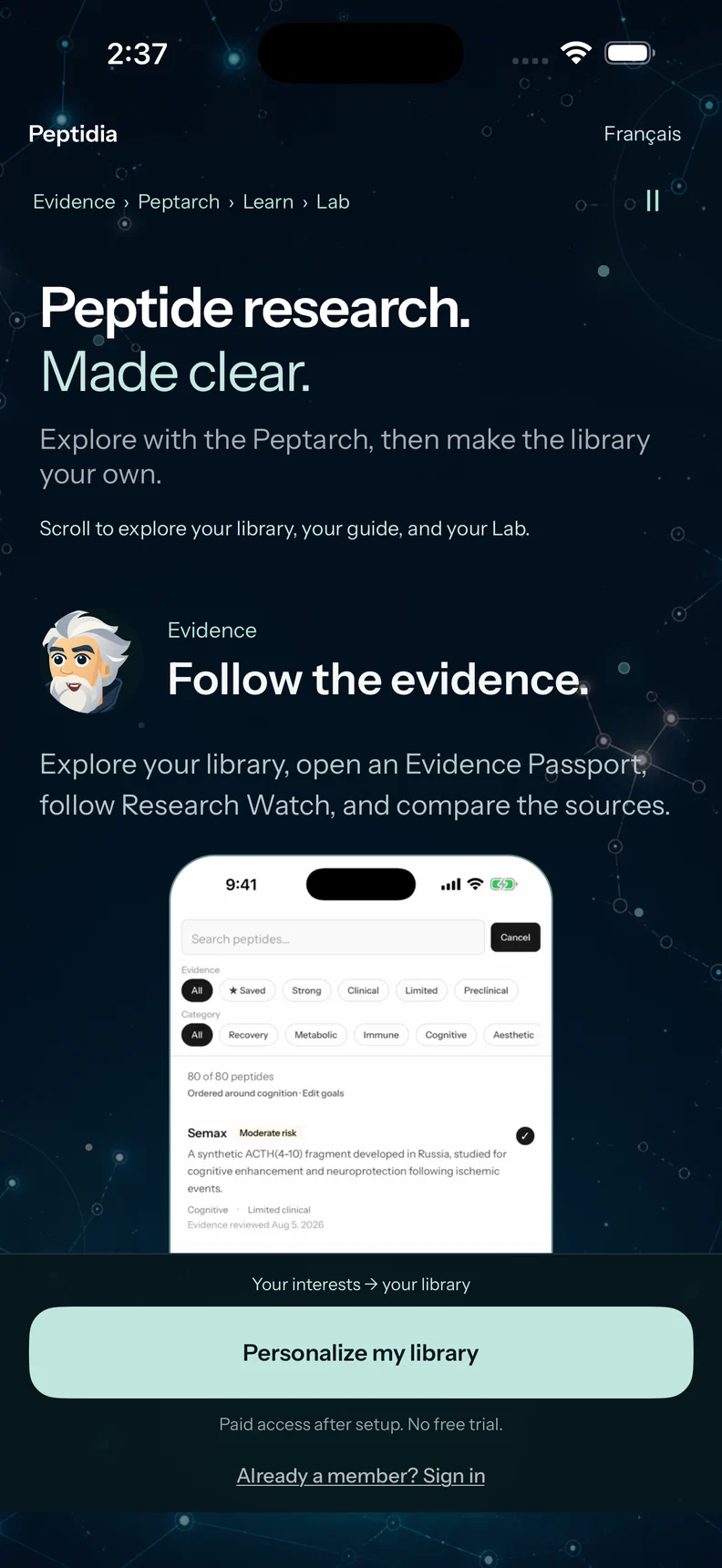
Explore peptide research with sources you can check. Keep your daily records, optional Apple Health observations, and vial history together in your private Lab.
Information only · 18+
From structure to understanding
Follow the sources behind a claim. Then keep your own observations organized in your private Lab, with the Peptarch as your guide.
Discover PeptidiaAvailable in Peptidia 1.5
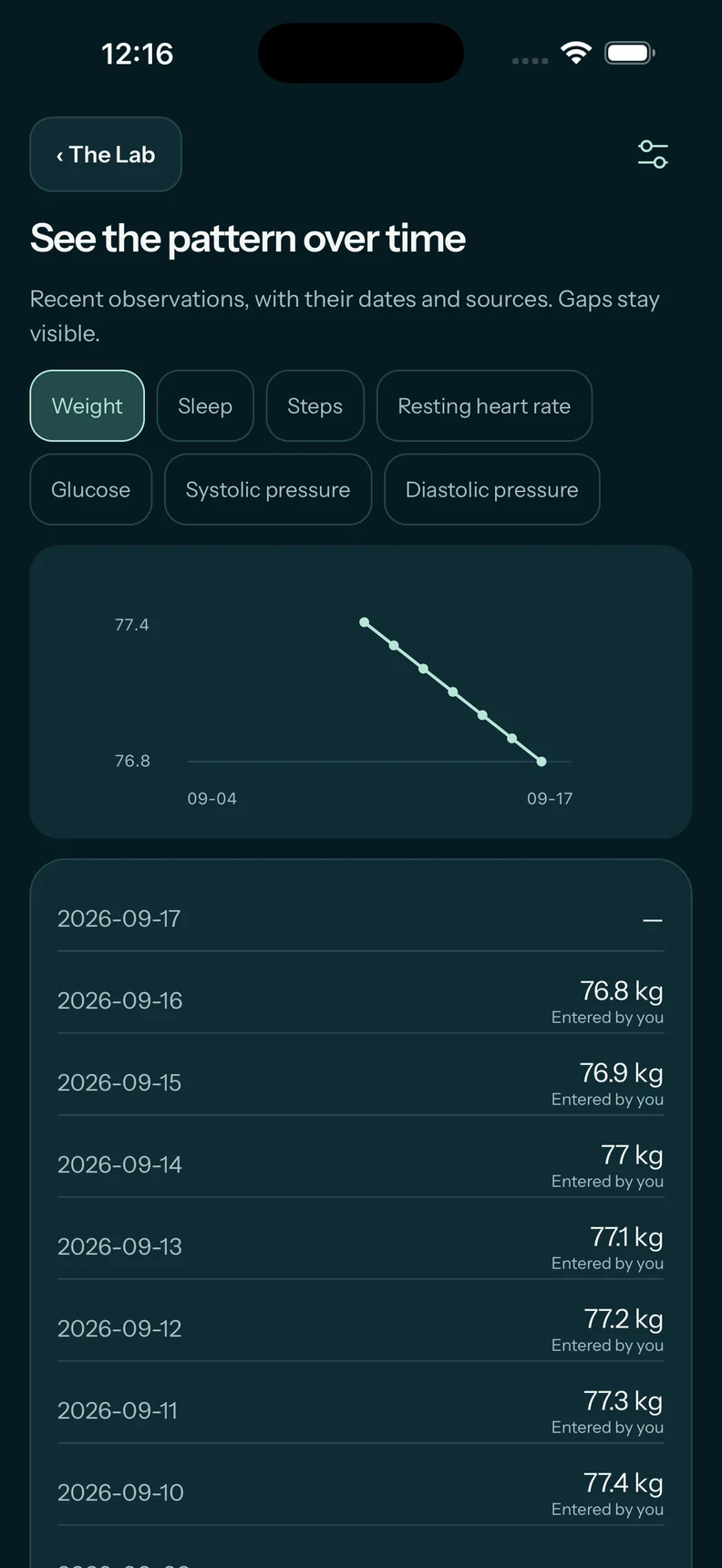
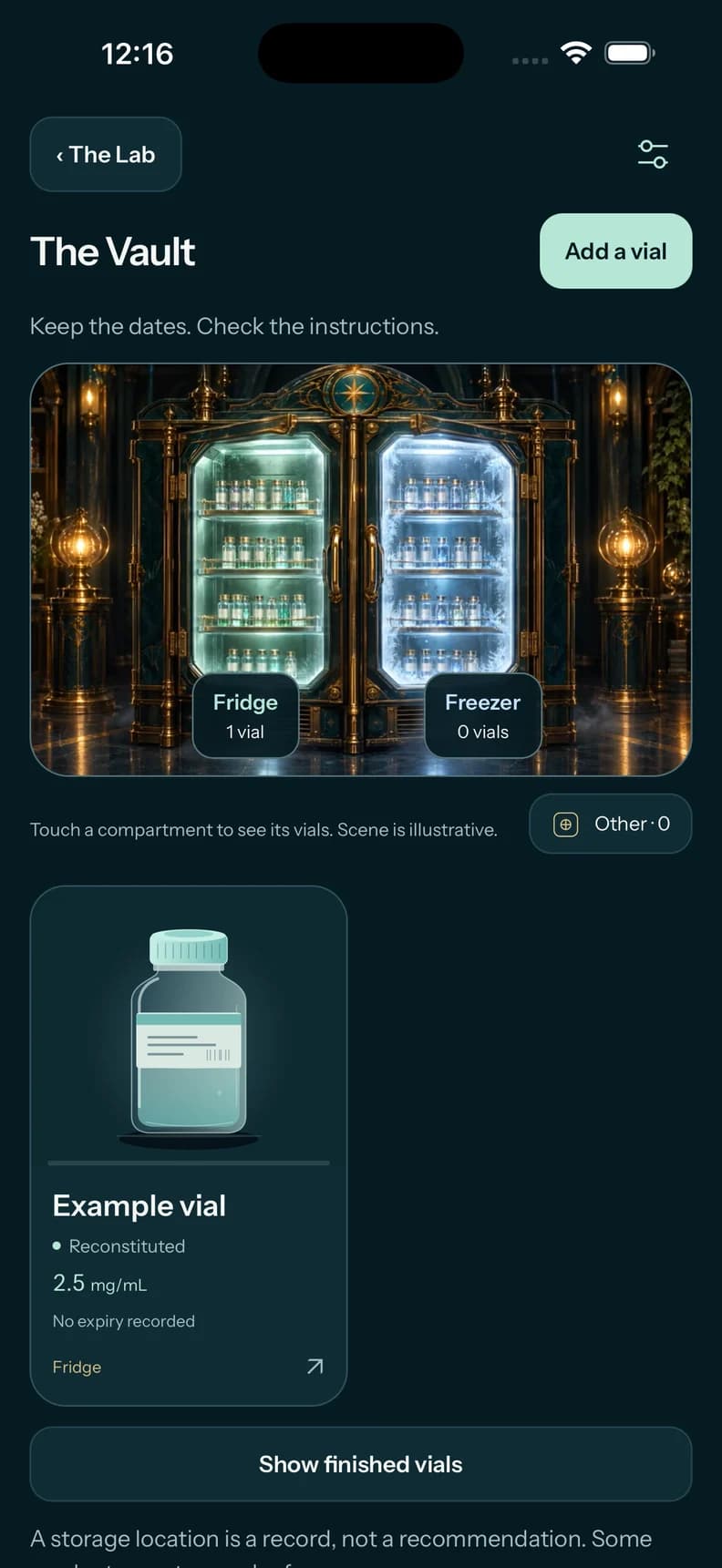
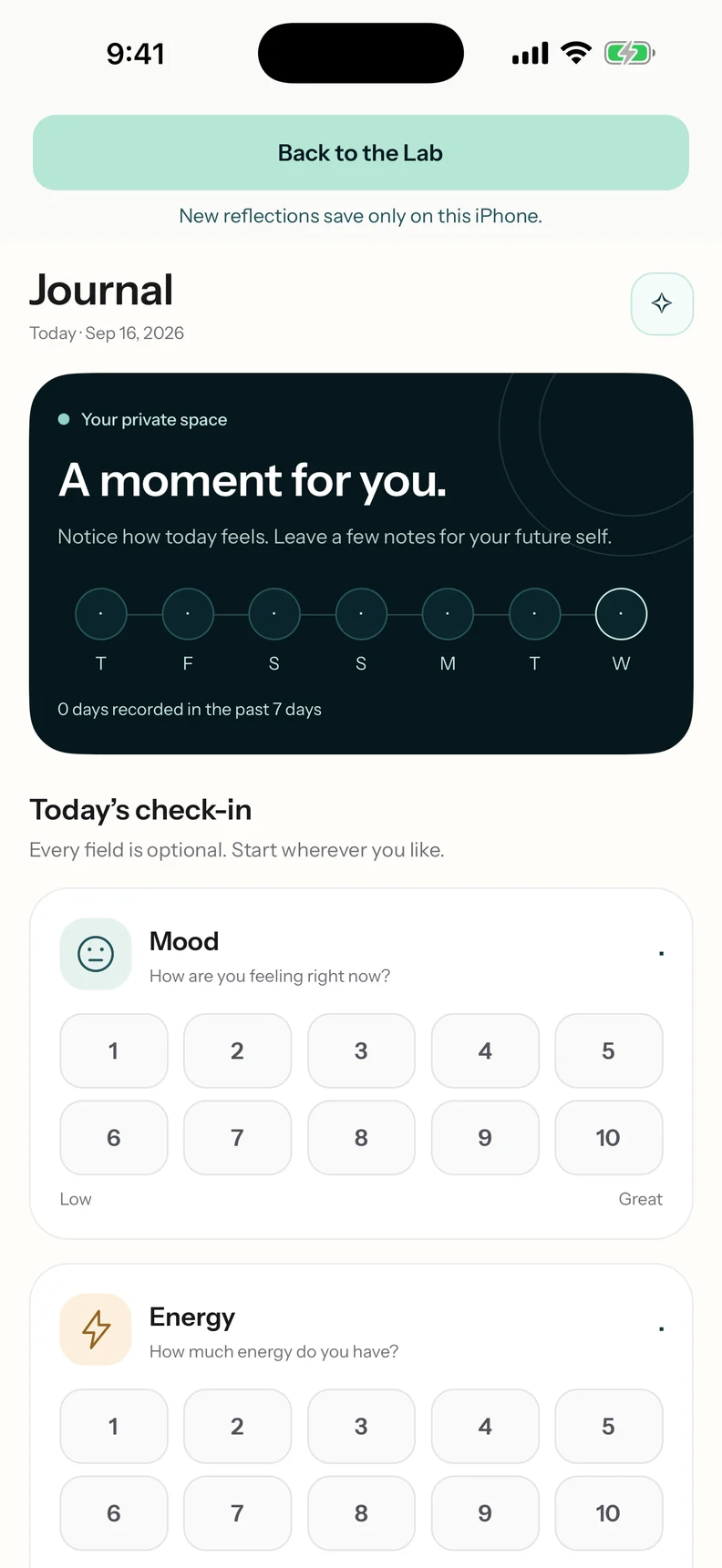
A dose in one note, a vial date in another, health readings somewhere else. The Peptarch’s Lab brings those records together, with a place for how you feel and what you measure.
Full access includes Today, Trends, Vault, and Journal in the private Lab.
Keep product names, recorded amounts, routes, and subcutaneous sites together. A body map helps you see where you logged a site. Convert only the amounts and concentrations you enter.
Your records, without suggested doses.
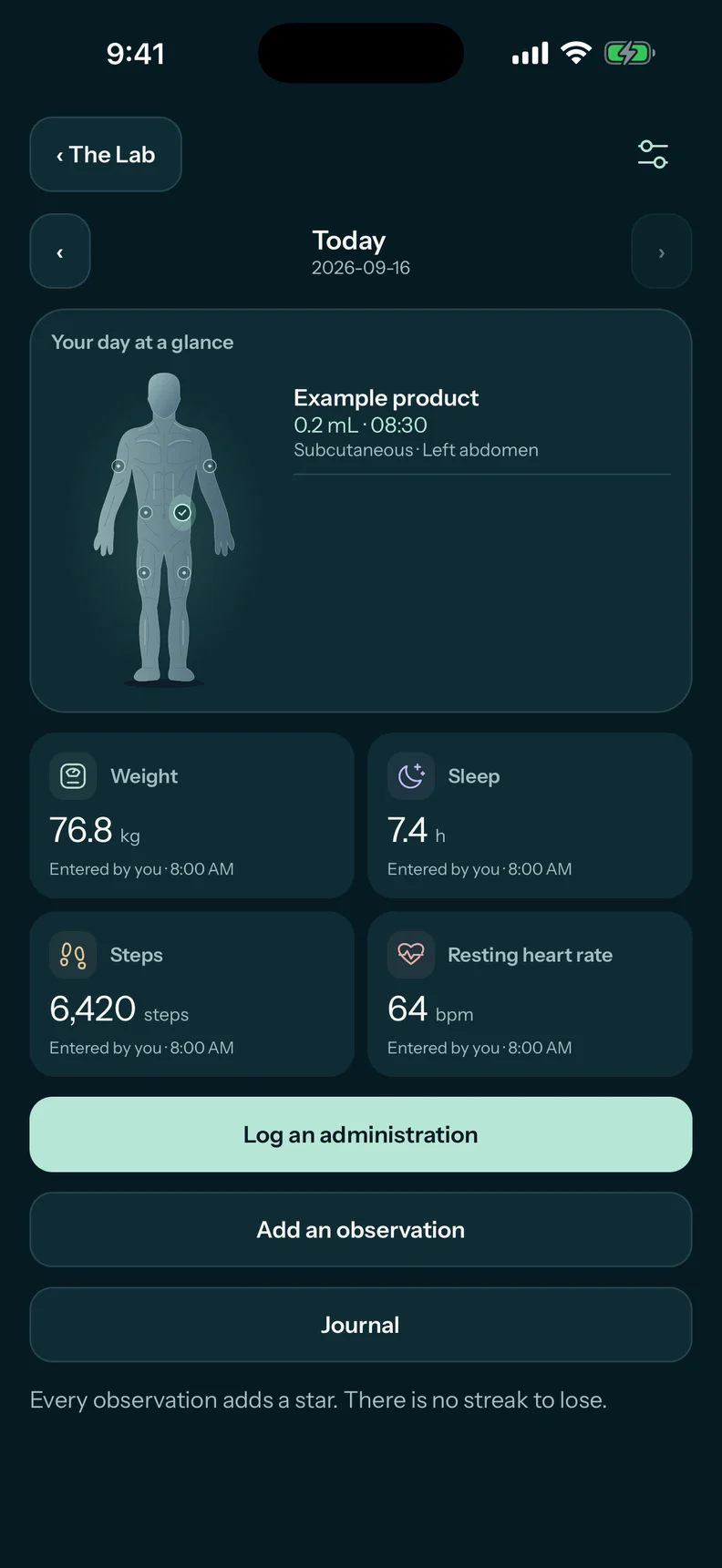
Connect Apple Health to read weight, resting heart rate, sleep, and steps. Glucose and blood pressure are separate opt-ins. Readings refresh when you open or return to the Lab, with their dates and sources. The Lab also works with manual entries and without Health access.
Choose a daily check-in reminder or a vial-date reminder. Notifications stay generic and private. Dates come from your label or pharmacy instructions; a reminder does not establish a vial’s safety or shelf life.
New Lab records stay encrypted on your iPhone, excluded from backups and never sent to our servers or AI. You control Apple Health access and can erase your local records in Lab settings. Deleting the app or losing your iPhone can remove these records.
How Lab privacy worksA guided welcome in V1.5
Scroll through Evidence, Peptarch, Learn, and Lab before personalizing your library. Larger Peptarch reflections and animated previews help explain what each part is for.
A scrollable introduction
Explore the library, inspect an Evidence Passport, meet the Peptarch, and glimpse Learn and the Lab in one guided welcome.
Evidence → Peptarch → Learn → Lab
Learn with Peptarch
Play five-question rounds, read sourced explanations, earn stars, and return to questions you missed. Anatomy and measurement guides stay close at hand.
Learn at your own pace.
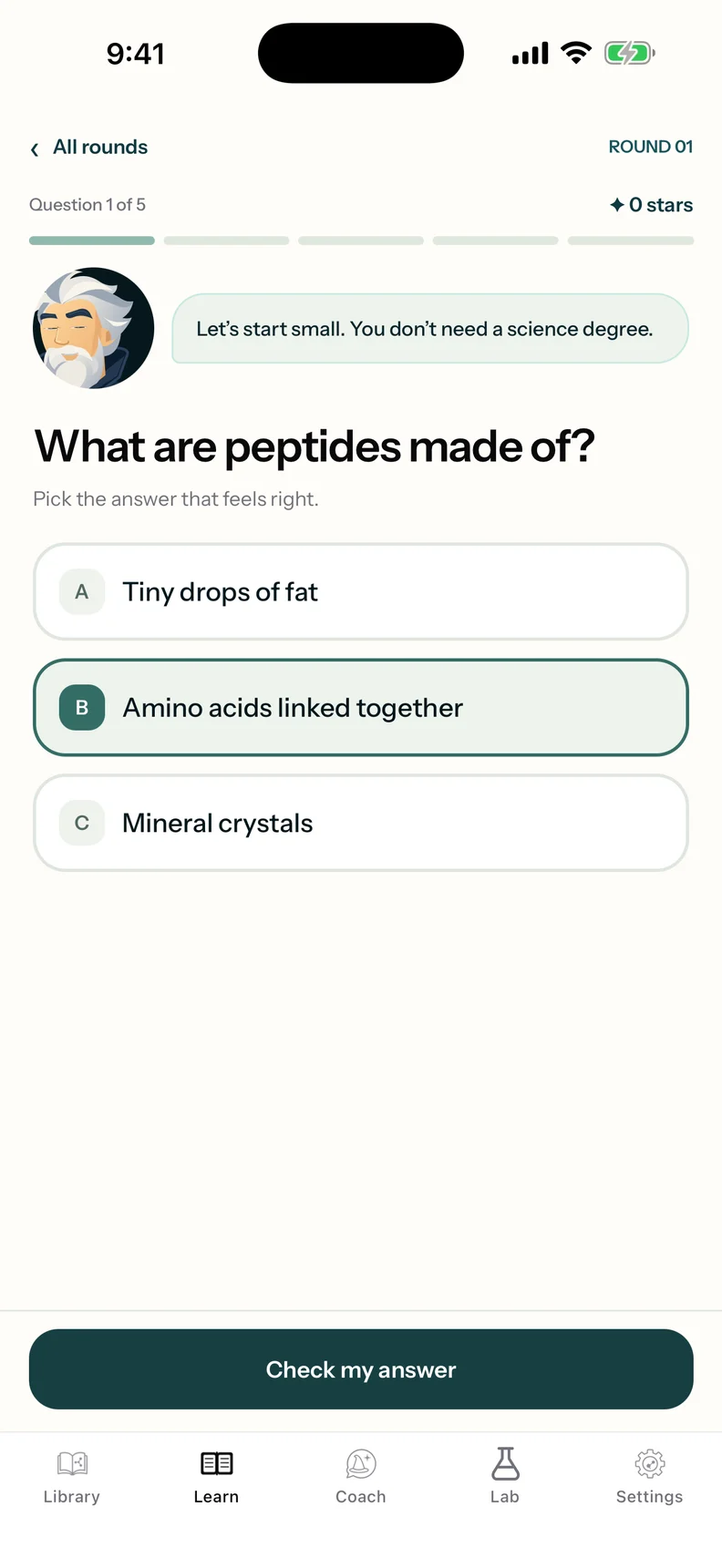
Actual V1.5 screens with example records. English screens shown; the app also supports French.

Your research interests still shape the library. The Peptarch helps you explore sources and learning tools; private Lab records stay outside his conversations.
Signal, separated

Peptide profile · Recovery
citedA plain-language profile of proposed tissue-repair pathways, evidence limitations, and safety context.
Evidence
Preclinical
Risk context
Clearly labeled
Source trail
PubMed + DOI
Commercial bias
None
Claims → context → sources
Inside Peptidia
Four deliberate moves take you from a name to the source trail behind it. The interface stays quiet so the evidence can do the talking.
Search by name or research interest, then scan evidence and risk labels before opening a profile.
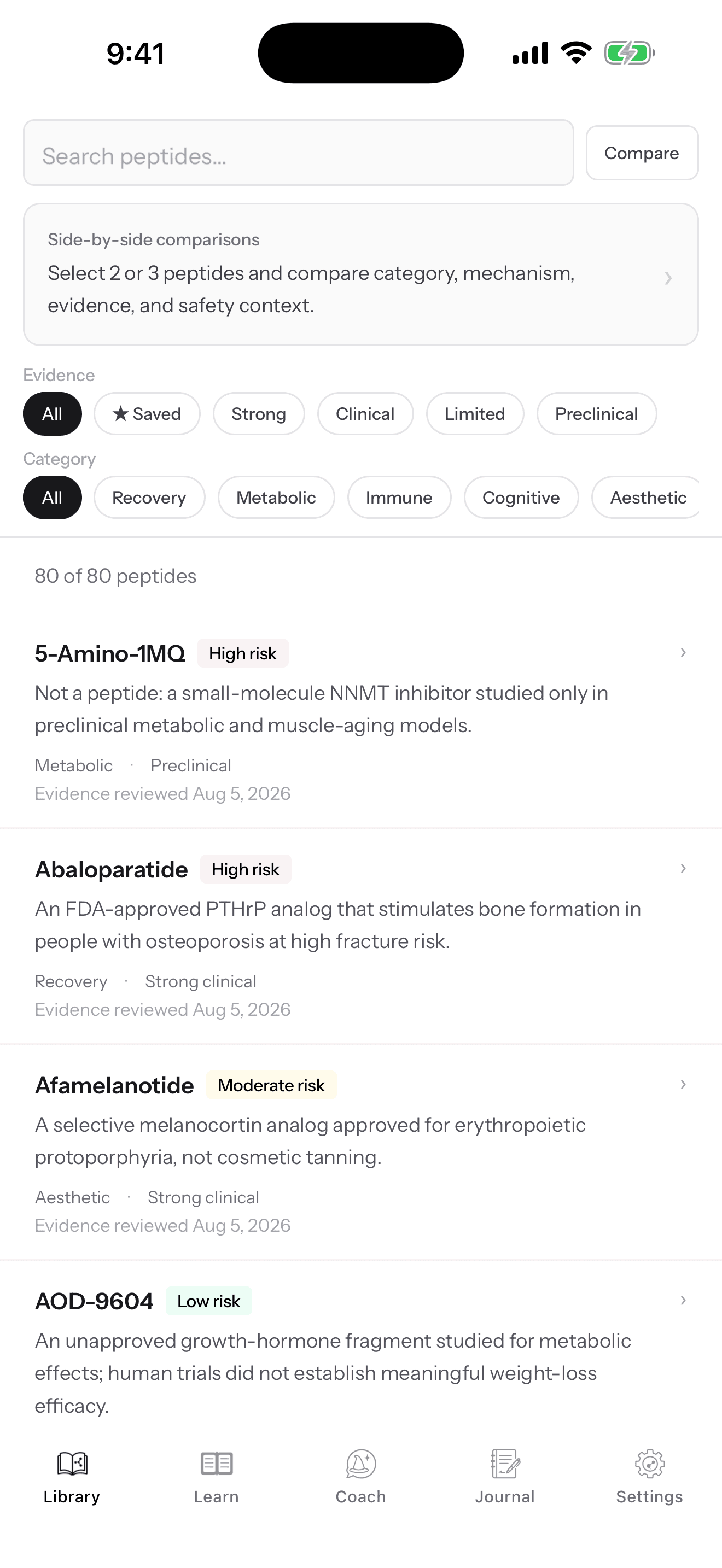
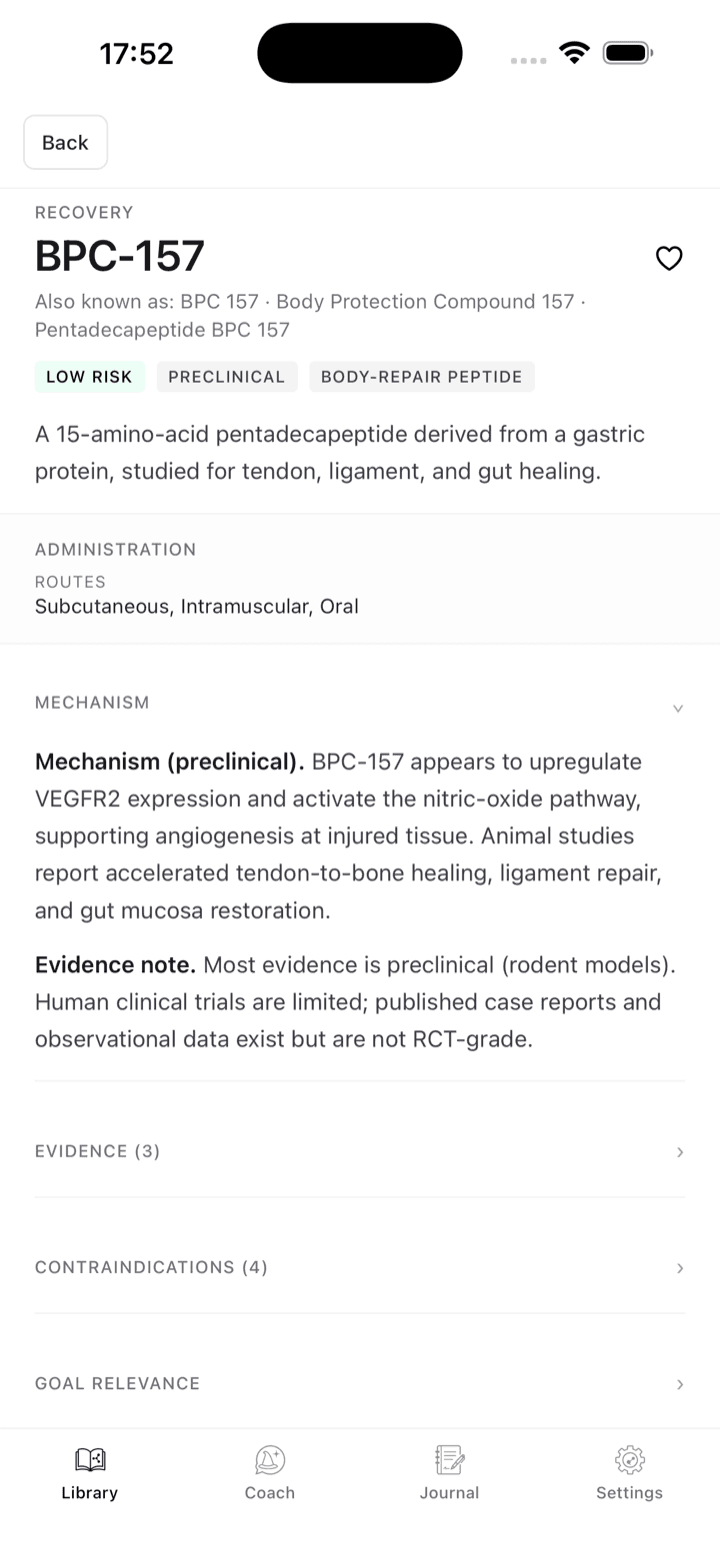
See research maturity, source strength, linked-source coverage, latest source year, and the last editorial-review date before reading mechanism or goal relevance.
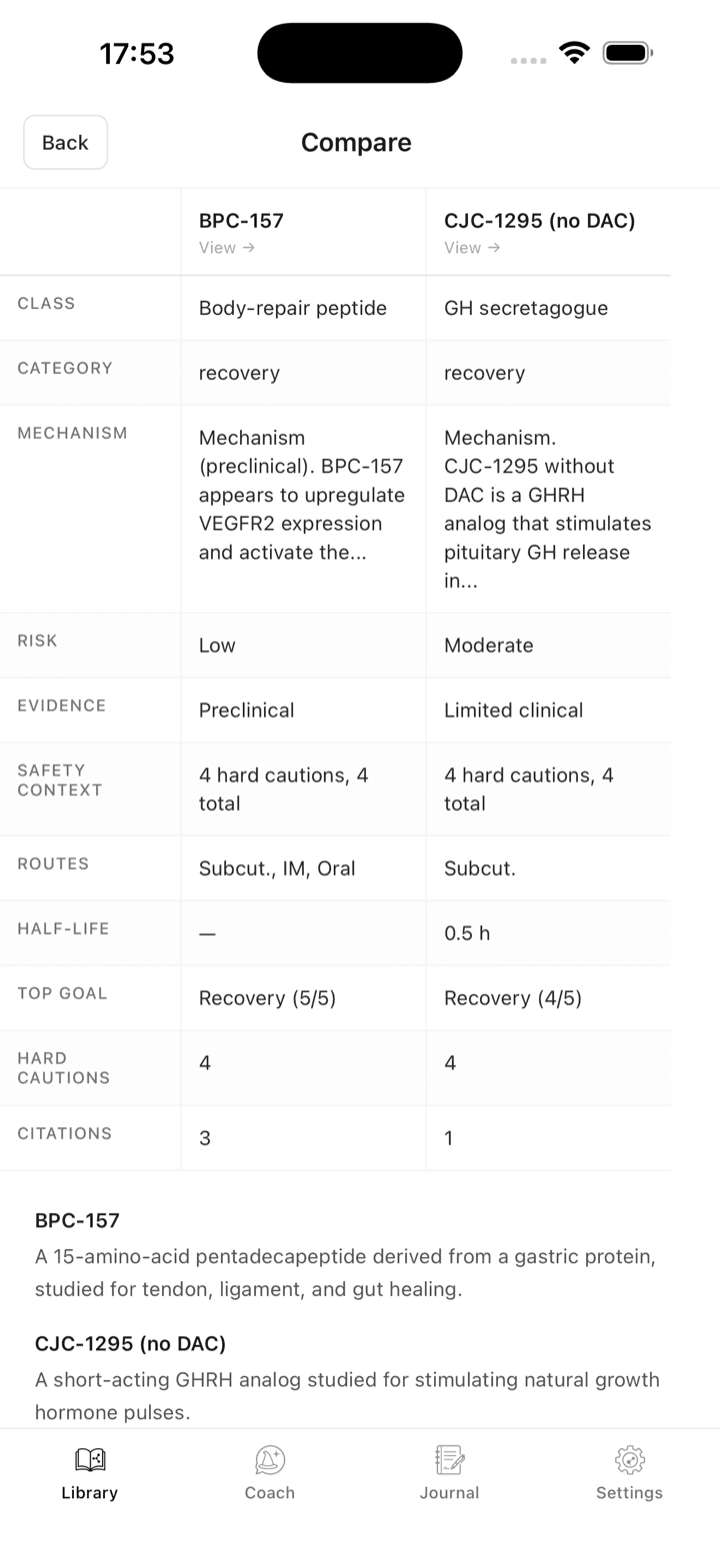
Compare class, evidence, safety context, and citations without turning the information into a recommendation.
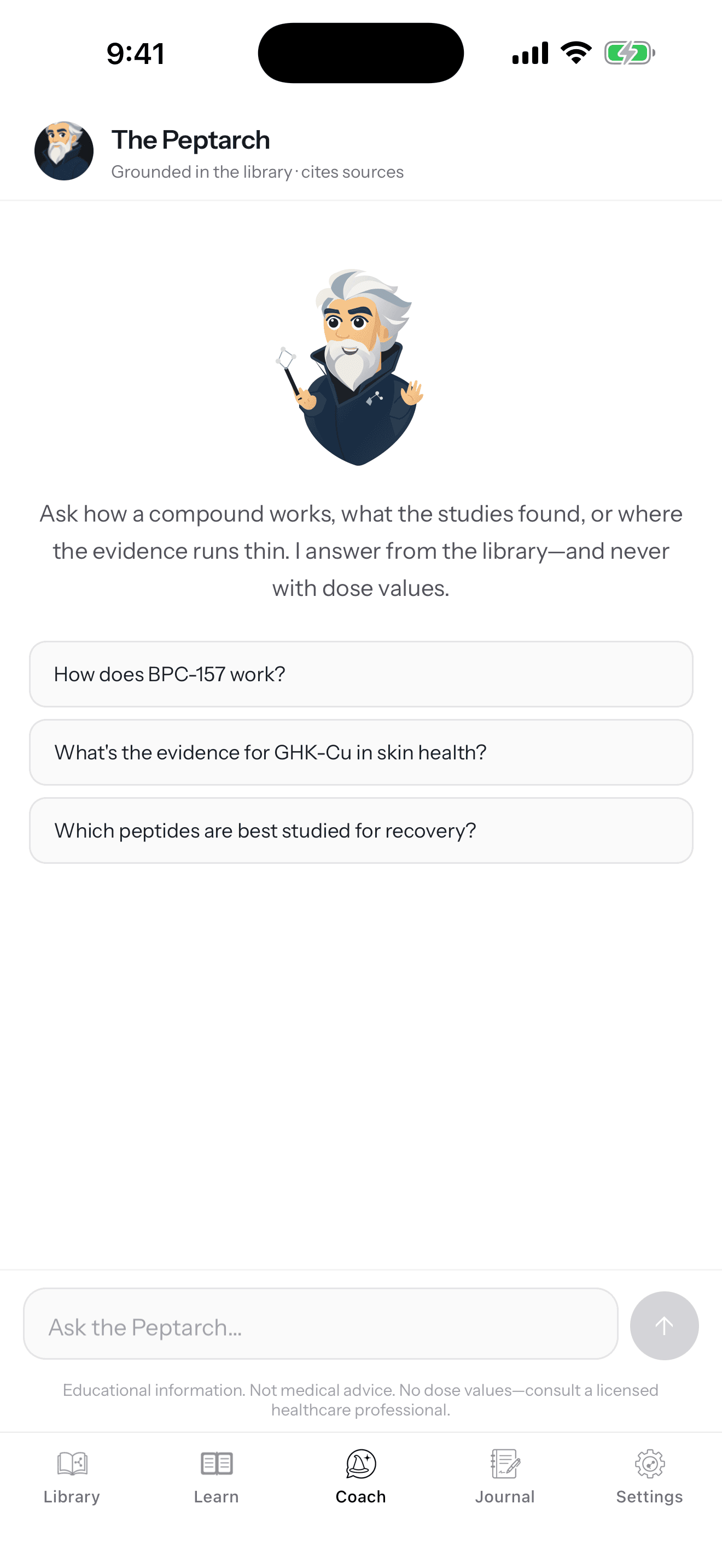
The AI guide answers from the curated library and separates library entries from the specific study records supplied to each answer.
Inside Peptidia
Four deliberate moves take you from a name to the source trail behind it. The interface stays quiet so the evidence can do the talking.
Search by name or research interest, then scan evidence and risk labels before opening a profile.
Learn and follow the research
Build on the Peptarch quizzes with visual guides to anatomy and measurements. Research Watch follows new publications every week.
Research Watch
Every published entry is scanned across PubMed and ClinicalTrials.gov. New source records are indexed separately from editorial conclusions, and subscribers can opt in to an alert only when something genuinely changes.
Interactive anatomy
Explore common subcutaneous regions, rotation principles, hygiene, and safety context on a source-cited body map. This reference does not provide a self-injection walkthrough.
6 sources · education only
Visible dimensional analysis
Learn how units, volume, concentration, and syringe scales relate through step-by-step formulas using your own values only.
Conversions · concentration · your numbers
The research standard
Every Evidence Passport shows research maturity, source and link coverage, strongest source tier, latest source year, uncertainty, and the date an editor last reviewed the record.
Peptide profiles now listed in the Peptidia app—each editorially reviewed
Explained source-strength tiers—not an unexplained score
Visible editorial-review date on every published profile
Meet your guide
The app’s Peptarch introduces your library, hosts the beginner quizzes, and helps you explore the research. In Coach, his answers draw on the curated library and supplied studies, with sources and evidence limitations you can inspect.
 The PeptarchGrounded in the library · cites sources
Full access
Peptidia is intentionally a paid, independent reference. No ads, no vendor commissions, and no content shaped around a checkout cart.
Review dates, evidence maturity, source strength, limitations, safety context, and direct source links on every full profile.
Weekly source scans across every published entry, with optional alerts only when the evidence index changes.
Three beginner quiz rounds with sourced answers, plus the anatomy and measurement guides.
Cited AI answers, plus a private Lab for your own records, optional Apple Health observations, trends, vial history, and the Journal.
What access includes
Monthly
$9.99/ month
Complete access, billed by Apple. Cancel anytime from your App Store subscriptions.
Founding lifetime
Launch only$59.99once
The same complete access with a single payment. Limited to one hundred launch places, while available.
Clear by design
Peptidia is precise about what it is, what it costs, and where its responsibility ends.
No. Peptidia is an educational reference. It does not diagnose or treat any condition, generate protocols, or recommend that anyone take a compound. It is not a substitute for a licensed healthcare provider.
The Peptidia dispatch
A concise newsletter for meaningful evidence additions, new learning tools, and product updates. No weekly quota and no inbox theatre.
By signing up you agree to our Terms and Privacy Policy.
Unsubscribe at any time by replying ‘unsubscribe’ to a Peptidia email.